Something Changed
I saw Pulp in Wythenshawe Park a few weeks ago. I live about two miles away, which made it possibly the most conveniently located big gig I’ve ever been to. I could walk there. The only problem was that once I’d arrived, I could barely see the band.
We were so far from the stage that for most of the evening I watched Pulp on one of the giant screens. This isn’t a complaint about them. I’ve seen them several times since the 90s, they’ve always been fantastic live, and they were again in Wythenshawe. I just couldn’t really see them doing it. Instead, I stood in a field watching a television showing me something that was happening in the same field, a very long way away.
And now they’re putting a Pulp film in cinemas that looks considerably more engaging than my experience of actually being there.
Pulp: What Do You Do for an Encore? is directed by Garth Jennings, who has been working with the band since making the videos for Help the Aged and A Little Soul in the 90s. It was filmed during Pulp’s 2025 tour, including their show at London’s O2, but it isn’t simply a concert film. Garth has mixed the performance with previously unseen material from four decades of the band’s history, with Jarvis Cocker narrating. There are 20 songs, old photographs, film, animation, and assorted pieces of Pulp’s past threaded through it.
And it looks incredible. More to the point, it looks intimate. The cameras are on the stage, among the band and the lights, close enough to see Jarvis’s face rather than identifying him by the colour of his jacket. Watching the trailer, I felt more connected to the performance in a couple of minutes than I had for much of the evening standing in the same field as the actual band.
There is obviously something ridiculous about this. Live music is supposed to be about being there. A film can’t reproduce the moment when thousands of people recognise the first few notes of a song at exactly the same time, or the sound of a crowd singing Common People back at the people who made it. I’m glad I went. I’m especially glad I saw Pulp again, practically in my own back garden.
But I also think there’s a point at which the scale of a concert begins to work against the reason I went in the first place. I wanted to watch Pulp perform. Instead, for much of the night, I watched a live television broadcast of Pulp performing several hundred metres away. And that’s before all the other stuff that comes with a massive outdoor gig — the queues, the toilets, the expensive drinks, getting in, getting out, and several hours standing in a field.
On 18 September, What Do You Do for an Encore? is showing in cinemas for one night, followed by a live Q&A with Jarvis and Garth. I’ll be able to sit down. I’ll be able to see the band. And, for once, Jarvis will be considerably larger than I am.
Perhaps that’s the odd thing about seeing Pulp again after all these years. I remember the first time very well. I’m not sure I’ll remember much about the view at Wythenshawe Park.
The view from the cinema looks much better. Which kind of makes me a little sad.
in DispatchesAugust again
August always feels more like the start of a new year to me than January. This year it’s been harder than usual to sense it coming. We’ve had heatwave after heatwave, weeks when it’s felt far hotter than a British summer has any right to, and even now summer doesn’t seem quite ready to leave. The Met Office figures suggest that isn’t just my imagination. But the nights are drawing in, holidays are mostly done, and normal life is beginning again. And, more importantly, so is the football.
Not that we’ve exactly been short of football this summer. There was a World Cup, which normally makes the gap between seasons much easier — a few weeks when there’s football almost every day, but without the usual anxiety of watching my teams. I enjoyed plenty of it, although it was increasingly difficult to separate the football from Gianni Infantino. His extraordinary closeness to Donald Trump had already bothered me, and then Trump actually rang him during the tournament to complain about the suspension of US striker Folarin Balogun. Balogun was subsequently allowed to play, although FIFA insisted the disciplinary decision had been made independently. The whole thing stank.
Almost as soon as the World Cup finished, Infantino was then at the centre of another enormous row over a plan to sell a stake in FIFA’s future commercial rights to private investors — a scheme FIFA eventually abandoned after a furious backlash. By the end of the summer, football associations were openly calling for him to go. I’ve disliked plenty of football administrators over the years, but Infantino is in a class of his own.
Still, a World Cup isn’t the same as the season starting. By August I’m ready to go again. And somehow I’m optimistic. Every year. A couple of players arrive, someone looks good in pre-season, and I start to think this might be the year it all comes together. The teams I follow have tested that optimism pretty thoroughly over the past decade — false starts, expensive mistakes, and enough new eras to make the announcement of another one feel more like a threat than a promise. But when the first game comes around, none of it matters. I’m back.
Perhaps it’s the reset I like. Whatever happened last season has gone, and everyone starts again on zero points. The fixtures are in the calendar — Saturday at three, Sunday afternoon, Monday night, or whatever other time the television companies have decided we’re playing — and a whole season stretches ahead. I still miss the simplicity of most games kicking off at three on a Saturday and being done by five, but that particular feature of football appears to have gone for good. You can see the difficult runs, the derbies, Christmas, and the long haul towards May, but none of it has happened yet. For a few days, at least, nothing has gone wrong.
That’s probably why August feels like a beginning. January arrives halfway through everything, in the middle of winter with the decorations barely put away. Football is much neater. One season ends, there’s a pause — World Cup or not — and then we start again.
So here we are. Another season, a few new players, and the completely unreasonable belief that this time it might all work out.
Ask me in October.
in DispatchesThe long way home
I went to see The Odyssey with my son Finn on my birthday this year. He’s 25 now, but Odysseus has been knocking around in his life for a long time. When he was little, he used to watch an animated version of the story over and over again — although the Cyclops terrified him. He loved it and was scared stiff by it, which is probably not a bad introduction to Greek mythology.
So when Christopher Nolan announced that he was making The Odyssey, Finn was always going to be interested. Last Christmas, in anticipation of the film, he bought me a beautiful hardback copy of Homer’s poem. I already owned one — a battered old Penguin Classics paperback that had belonged to my late dad. His dates back to his student days and looks like it. The cover is worn, the spine has seen better days and the price printed on the front is 3/6.
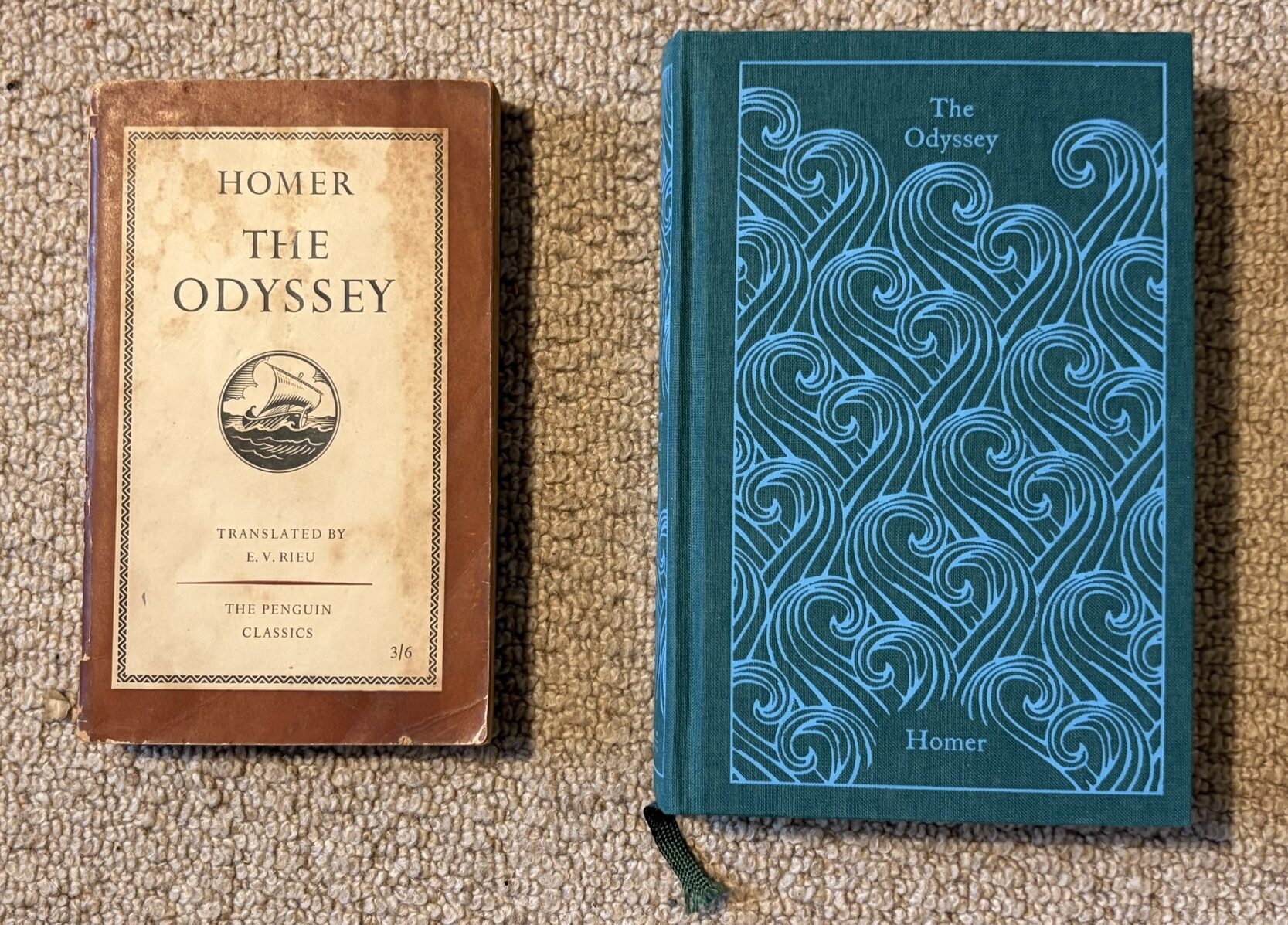
I put the new one alongside it and noticed something I hadn’t expected. Finn had bought me the same translation, even though there are options.
Both are E. V. Rieu’s translation — first published by Penguin in 1946. Finn had no idea. He hadn’t checked the old book or deliberately sought out the same version; he’d chosen an edition he thought I’d like. So I now have two copies of the same words, bought many decades apart — one by my dad when he was a young man, and the other by my son, long after my dad had died.
I’m wary of attaching too much meaning to coincidences, but I like this one.
There is something appropriate about it being The Odyssey, too. This is a story that has already made a ridiculous journey. People were telling versions of it centuries before anyone wrote down the text we now associate with Homer, and it has survived for something approaching 3,000 years by being told, translated, adapted, and told again.
Finn first encountered it as a cartoon. My dad read Rieu’s translation. I have his book, and now another copy of the same translation from Finn. And this summer the two of us sat in a cinema together and watched Nolan tell the story again. He told it well.
That is one of the things I love about old stories. We sometimes treat the classics as things that have been preserved — important cultural objects carefully carried down through history. But stories don’t survive like that. They survive because people keep finding them, enjoying them, and passing them on. They change form along the way. A poem becomes a book, then a cartoon, then a film. A terrifying one-eyed giant remains a terrifying one-eyed giant.
And somewhere in all that, a book passes from a father to a son, and somehow another copy of the same book returns in another form from a son to a father.
It took Odysseus ten years to get home. This copy of his story took a little longer to find its way to where it needed to be.
in DispatchesWhatever happened to just being bored?
I can’t remember the last time I was properly bored. I don’t mean bored by something — a film I’m not enjoying or a conversation that’s gone on too long — but that old-fashioned kind of boredom when there was simply nothing to do. Waiting for a bus, sitting on a train, arriving at a pub before everyone else. There used to be quite a lot of it.
There isn’t anymore, obviously, because I have a phone. And I’ve noticed recently how quickly I reach for it. Not because there’s anything I particularly want to look at — most of the time there isn’t — but because there’s a spare minute and apparently I’ve decided that needs filling. I’ll check the news, look at football, open social media, close it and, embarrassingly often, open it again a minute later.
I’m hardly going to complain about smartphones. I’ve spent years writing about technology and I still think they’re extraordinary things. I can listen to almost any record ever made, find my way around a city I’ve never visited, take a decent photograph, read a newspaper or look up the name of that bloke who was in that thing without moving from my chair. I wouldn’t willingly give any of that up.
But I do wonder what happened to all the gaps.
I remember long train journeys with a newspaper, a book and, years ago, a Walkman. At some point you’d finish the paper or stop reading. The tape would reach the end. There wasn’t anything else, so you looked out of the window for a while. I don’t remember finding this particularly difficult. Sometimes you thought about things. Sometimes you watched the world go past. Sometimes, presumably, you were just bored.
Those moments have almost disappeared. If I’m waiting for somebody, I look at my phone. If I’m on a train, I look at my phone. Even watching television, I’ve occasionally caught myself looking at my phone while supposedly watching something on another screen. The ridiculous thing is that I’ll sometimes have to rewind because I’ve missed something — then find myself reaching for the phone again.
I suspect boredom was probably quite useful. Your mind wandered because there was nowhere else for it to go, and occasionally it wandered somewhere interesting. Ideas appeared. You noticed things around you. Or nothing happened at all — which I increasingly think might have been the point.
None of this means I’m about to have a digital detox or swap my smartphone for something that can only make calls and send texts. I like my phone far too much. But I am trying to notice when I take it out simply because nothing has happened for 30 seconds.
Perhaps the answer isn’t getting rid of the phone. It’s just remembering that not every empty moment needs filling — and that occasionally having absolutely nothing to do might actually be quite nice.
in DispatchesThe game it took me 16 years to finish
I finally finished Red Dead Redemption this month — 16 years after I started it.
I first played it not long after it appeared on the PlayStation 3 in 2010. I loved it, but never got to the end. Over the years I went back several times, usually on a different console, and invariably discovered I’d forgotten what I was doing, where I was going and why everyone wanted to shoot me. So I’d start again. And then stop again.
Late last year Rockstar released an enhanced version for the Nintendo Switch 2 and I decided to give it another go. This time, for whatever reason, it stuck.
Perhaps it was the Switch itself — being able to pick it up for half an hour rather than commit an evening to sitting in front of the television. Perhaps Breath of the Wild had changed the way I play games. Or perhaps I’m simply more patient than I was 16 years ago.
Whatever it was, I stopped worrying about getting through it and just enjoyed being there.
And Red Dead Redemption is a wonderful place to be. Its version of the dying American West still looks beautiful, despite the game’s age — huge landscapes, tiny settlements, changing light and long journeys on horseback when very little happens. Especially those journeys. I did a lot of riding around.
I’ve realised that’s increasingly what I want from games. I’m not interested in being particularly good at them and I’ve no desire to play competitively online against someone a third of my age who has killed me before I’ve remembered which button draws my gun. I like exploring — going somewhere because it looks interesting and getting distracted along the way.
It’s why I’ve loved Breath of the Wild. I can spend an evening wandering around Hyrule, climb something simply because it’s there, spot something else from the top and head off in completely the wrong direction. Hours later I’ll turn the Switch off having entirely failed to do whatever it was I intended.
Red Dead Redemption gave me much the same pleasure — but something else happened as I got closer to the end. I became surprisingly invested in John Marston. He’s a former outlaw trying to escape his past and get back to his family, and after all those years of starting and stopping I’d somehow become attached to him.
So when the end finally came, I found it genuinely emotional. Some of that is testament to the writing, but I think some of it was simply the strange history I had with the game. I’d been returning to John Marston’s story, on and off, for 16 years. Finishing it felt like closing something.
It also made me realise why I’m enjoying games again. I don’t really care whether I finish them anymore. I’m quite happy for a game to be somewhere I occasionally visit — somewhere to wander around for an hour before returning to real life.
Although if I do start another one, I’d quite like to finish it before 2042.
in DispatchesAround the Moon and back
The Apollo 8 mission of 1968 followed more or less the same plan as Artemis II. Around the Moon and back. Pioneering a pathway for others to follow.
I was 18 months away from being born when Frank Borman, Jim Lovell, and William Anders made that incredible journey, and a year away from existing when Apollo 11’s Eagle lunar module actually landed. So it’s all a legend to me. I know it like the back of my hand, but there are no memories.
A fascination for space and space travel is in my blood, though — the last time I saw my grandpa alive, I was returning a book about the heavens to him. We’d spent many hours tracking down the planets using a telescope that seemed so huge to me, still in single figures, that I thought I might live in it. I would have liked to. The memories I still have of seeing Jupiter’s angry red storm, and close-ups of the Moon’s surface are as vivid now as they were the day we made them.

The Space Shuttle was my Apollo. I still rank it as one of humanity’s greatest accomplishments. A vessel that could go into space, and come back intact… and then go again. A miracle.
It first launched in 1981, some seven months after my grandpa’s death, and I was proud to be appointed head of Shuttle Watch at my school. The job was to monitor the huge TV (with a VHS bolted to its stand) that had been wheeled out into the playground, and alert the rest of the school to imminent blast-off as they diverted themselves with the unfathomably earthy pursuit of Sports Day. All went according to plan, and I was not the only one open-mouthed and breathless as Columbia hurtled towards the heavens. What a day. I was heartbroken my grandpa missed it. He would have loved it.

A few years ago, I was in California on holiday with my family when we made a day out of it at the California Science Centre in Los Angeles. There, you will find the Space Shuttle Endeavour— impressively correctly spelled— on show and open to visitors. I surprised myself by filling up and almost shedding a tear when I was in its presence. I wasn’t sad, I was overwhelmed.
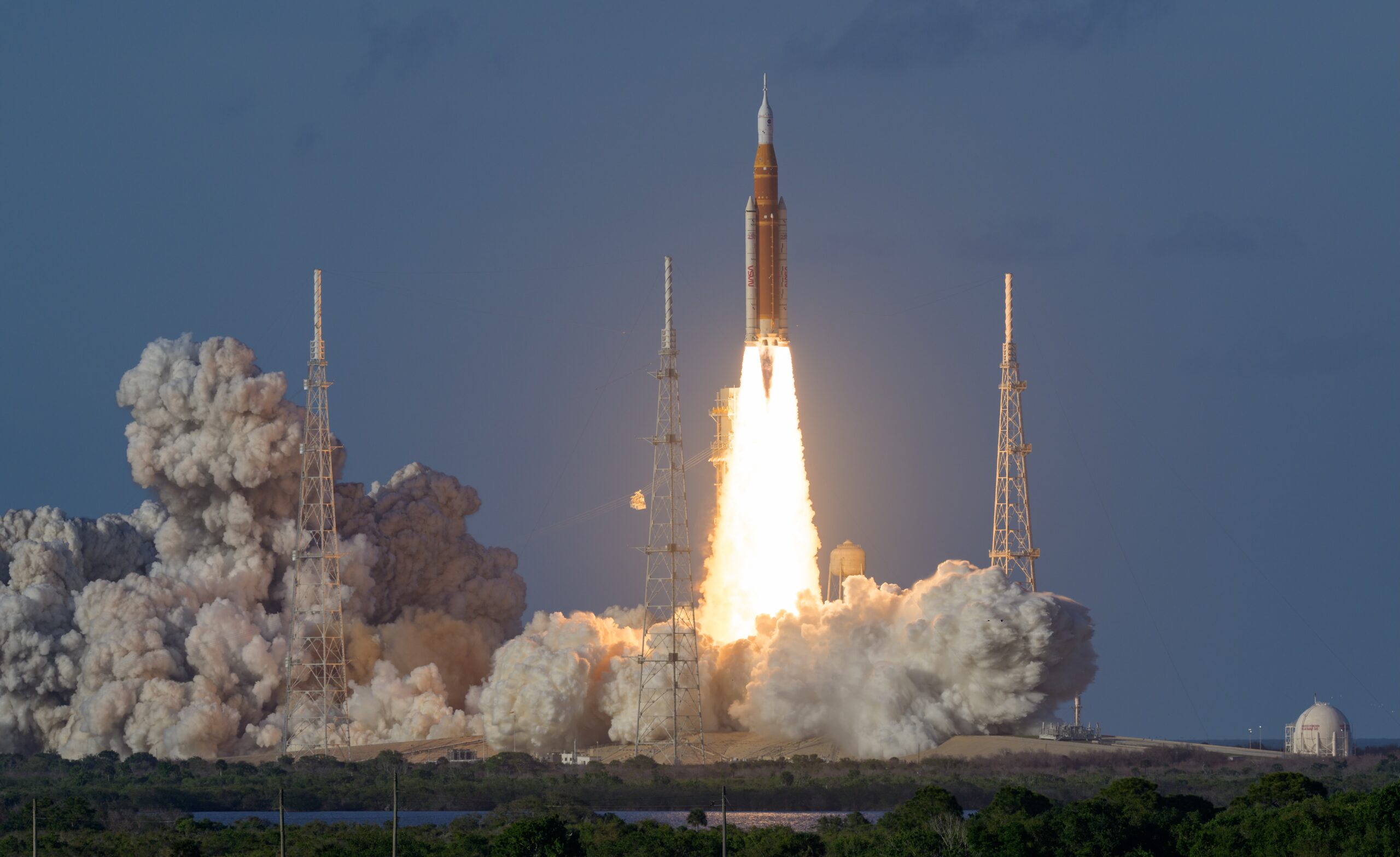
I had a similar feeling on April 1 as I watched the beginning of the Artemis II mission some 4,000 miles away in Florida. For the first time in more than 50 years, humans are on their way to the Moon— they have already broken Earth orbit and are, as I write, in the early stages of that 250,000+ mile trip to our only natural satellite. Mind-blowing.
There are those who don’t think the cost is worth it. Others who don’t even believe it’s really happening. Fools. If we are to survive as a species and outlive the Sun, there is only one way we need to go. These are our baby steps. And there are myriad discoveries about the nature of the universe to be made, too. Let’s go and make them.
There are many more reasons why the Artemis programme matters, but these are mine.
So my fingers are crossed and my breath is bated for astronauts Reid Wiseman, Victor Glover, Christina Koch, and Jeremy Hansen. Godspeed — may you safely fulfil your mission to pioneer a pathway for others to follow. For all mankind.
 in Dispatches